


Two-Sided Guidance
A roller on each side of the frame helps limit lateral movement as the gate travels.
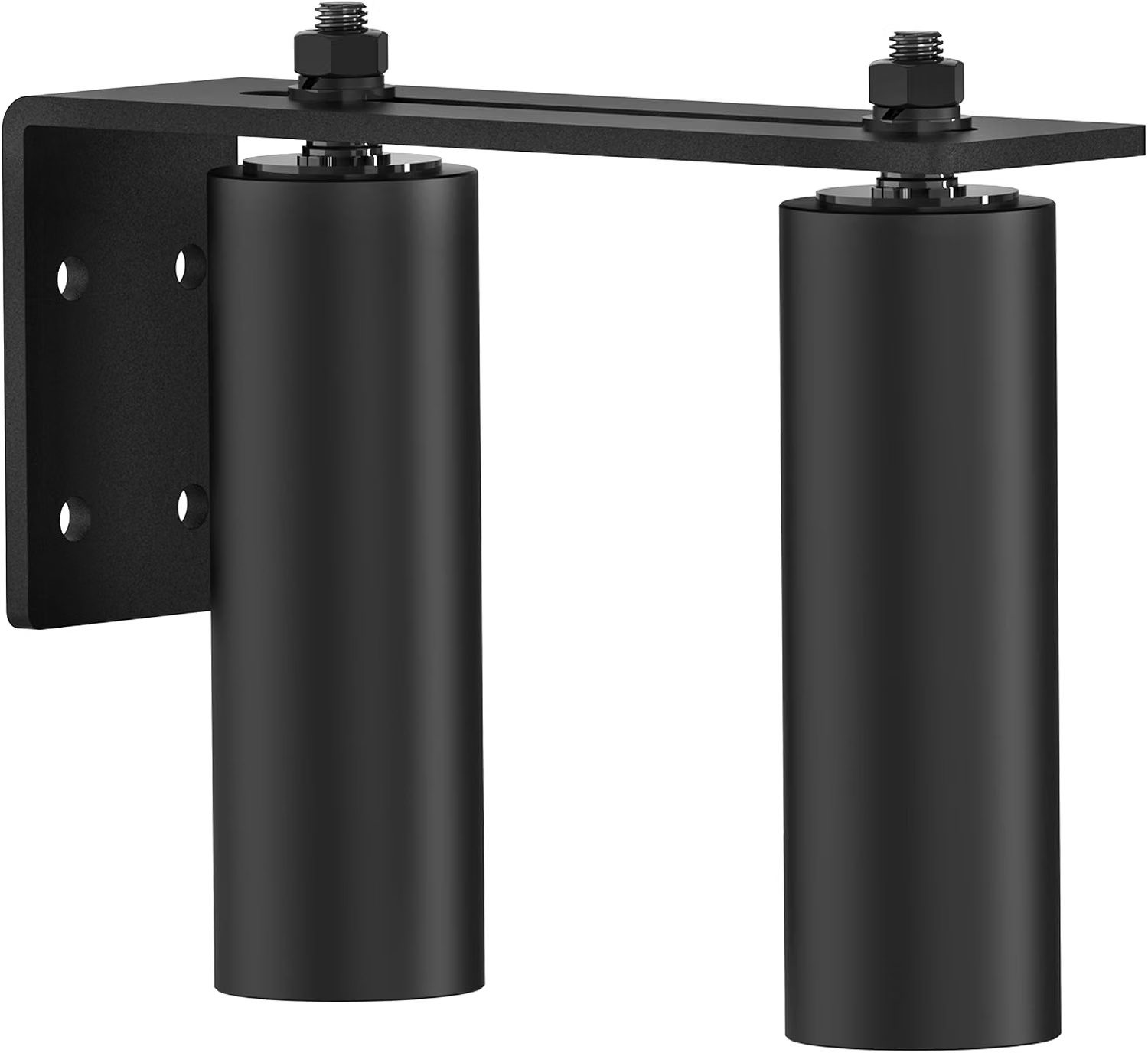


This 6″ adjustable sliding gate guide roller assembly helps keep sliding and rolling gates aligned as they travel. Two hard nylon rollers guide both sides of the gate frame, helping reduce side-to-side movement and lowering the risk of the gate shifting away from its track.
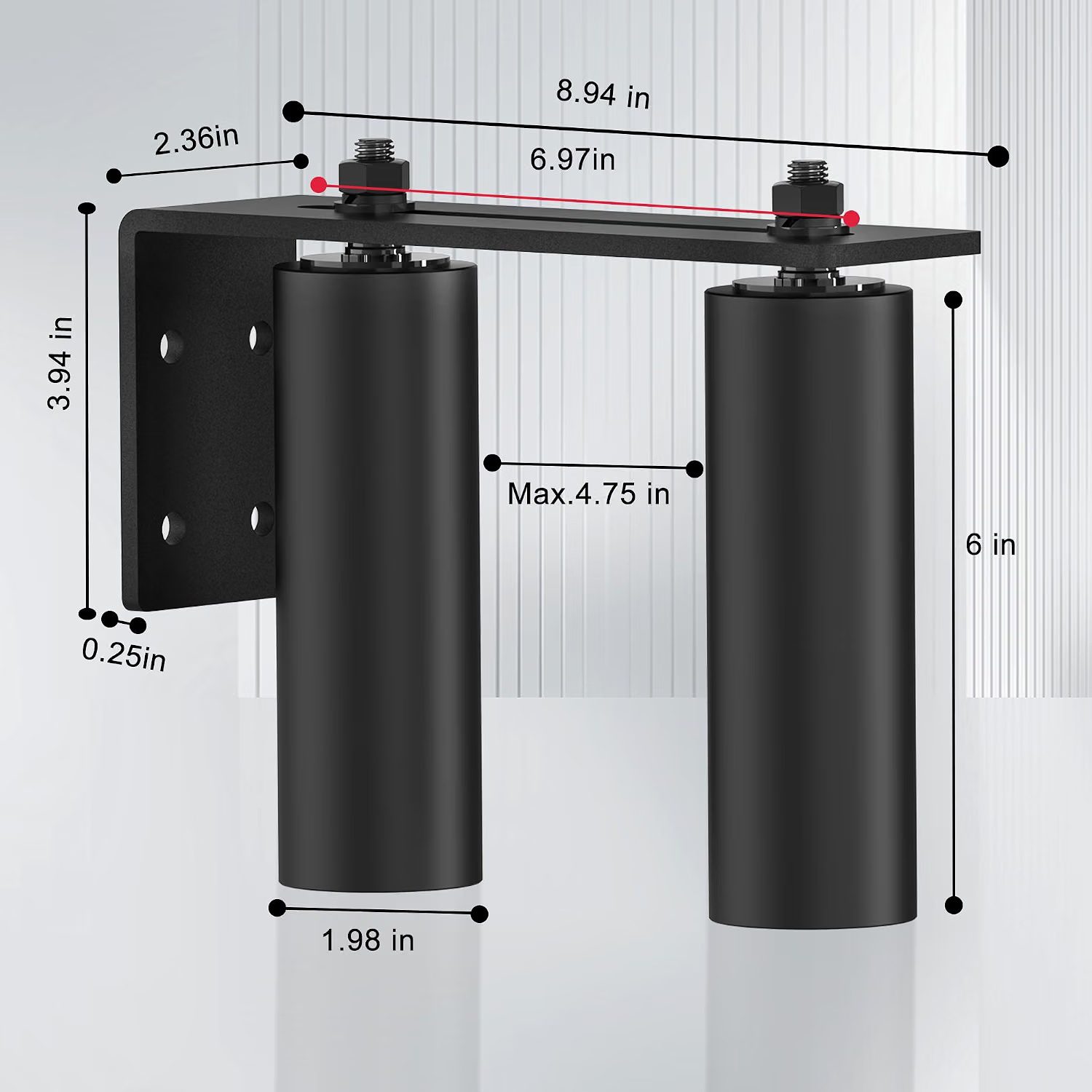
The heavy-duty black L-shaped steel bracket mounts to a compatible wall, post, or support and provides adjustable roller positioning for gate frames up to approximately 4.75″ wide. The bracket can be oriented above or below the rollers when the installation and supporting structure permit.
The pair of nylon rollers straddles the gate frame and supports consistent side-to-side positioning during operation.
A roller on each side of the frame helps limit lateral movement as the gate travels.
Solid nylon contact surfaces guide the gate without metal-to-metal contact against the frame.
Slide the roller hardware along the bracket slots to fit gate frames up to approximately 4.75″ wide.
Correctly positioned guide rollers help the gate remain aligned with its wheel and track system.
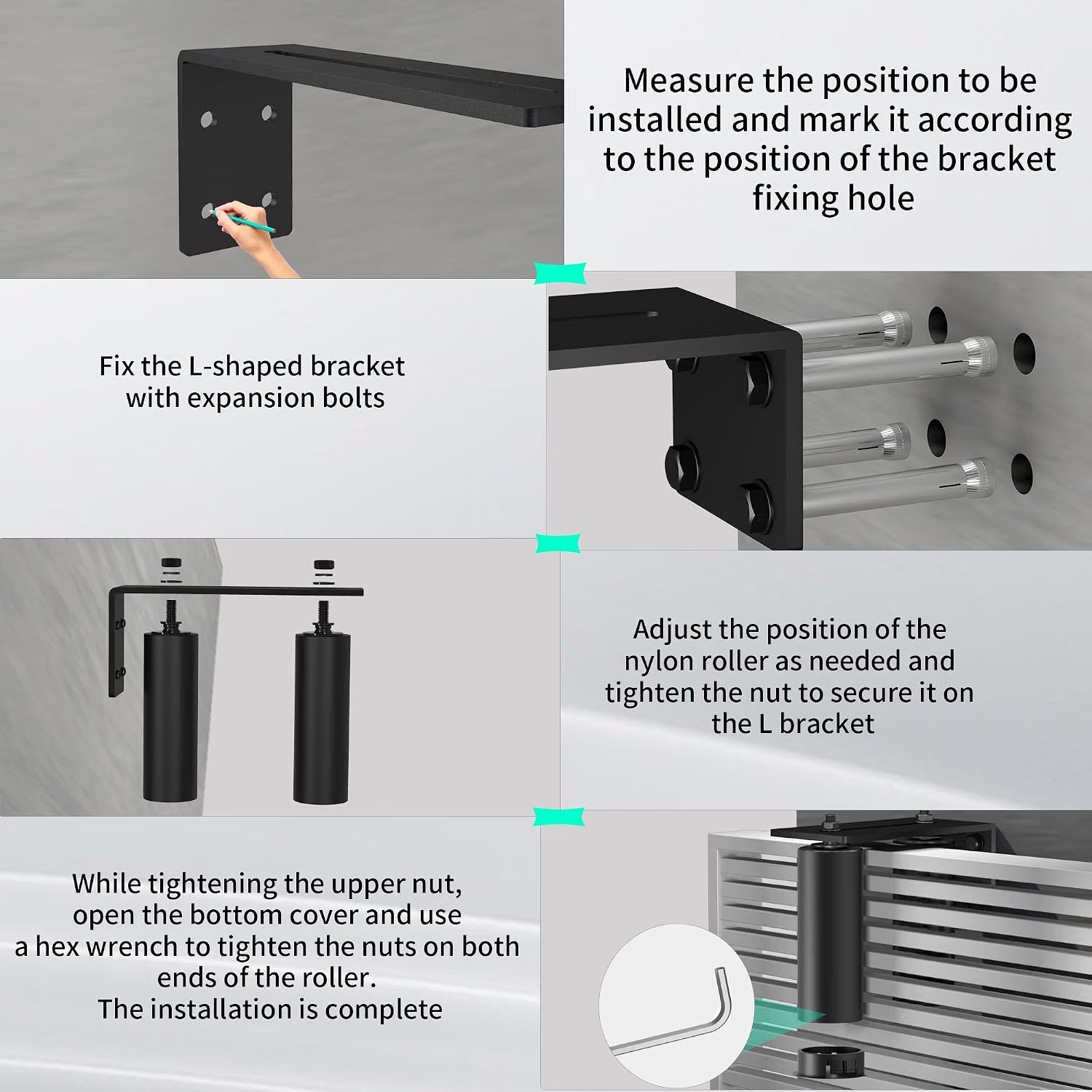
Measure the gate and mounting location first, secure the bracket to a structurally suitable support, and adjust both rollers for smooth travel.
Hold the L-bracket in its final position and mark the four fixing-hole locations.
Use structural anchors, bolts, or a compatible welded connection appropriate for the supporting material and gate load.
Adjust the rollers along the top slots so they guide the gate without binding or excessive pressure.
Secure the adjustment hardware, move the gate through its complete travel, and recheck alignment and clearances.
Included: One black L-shaped steel mounting bracket, two 6″ hard nylon guide rollers, and the roller adjustment hardware shown.
Sold separately: Wall or post mounting fasteners, expansion anchors, gate frame, track system, tools, and welding supplies.
Use the dimensional drawing to confirm roller size, bracket dimensions, adjustment range, and available mounting space.
Dimensions are approximate. Mount the bracket to a structurally suitable support and select fasteners or a welded connection for the substrate and gate loads. Set the rollers close enough to guide the frame without binding, then test the full gate travel before regular use.
Answers about sizing, compatibility, adjustment, mounting, and what is included.
It guides the sides of the gate frame during travel, reducing lateral movement and helping the gate remain aligned with its wheel-and-track system.
The adjustable dual-roller opening supports gate frames up to approximately 4.75″ wide. Confirm the complete mounting layout and operating clearance before ordering.
No. The two 6″ rollers are made from hard nylon, providing a durable guiding surface without metal-to-metal contact against the gate frame.
It is suitable for compatible Alumission sliding-gate installations when the gate-frame width, mounting location, bracket clearance, and supporting structure match the assembly dimensions.
No. This assembly provides lateral guidance near the top or side of the gate. The gate still requires a properly sized wheel, track, frame, stops, and supporting hardware.
One black steel L-bracket, two adjustable 6″ nylon rollers, and the roller-positioning hardware shown are included.
Mounting fasteners and anchors are sold separately. Choose hardware rated for the supporting material, gate loads, and installation conditions.
The L-shaped bracket may be oriented to suit compatible installations when the supporting structure, clearances, and fastening method allow.
Position one roller on each side of the gate frame with enough clearance for free movement. Tighten the hardware and test the gate through its entire travel to confirm it does not bind.
It may be welded to a compatible steel support by a qualified installer, or mechanically fastened using suitable structural hardware. Protect or repair the finish where welding affects it.
Periodically check roller wear, fastener tightness, bracket condition, clearances, and gate alignment, especially on frequently used or automated gates.
Discussions
There are no questions yet.