

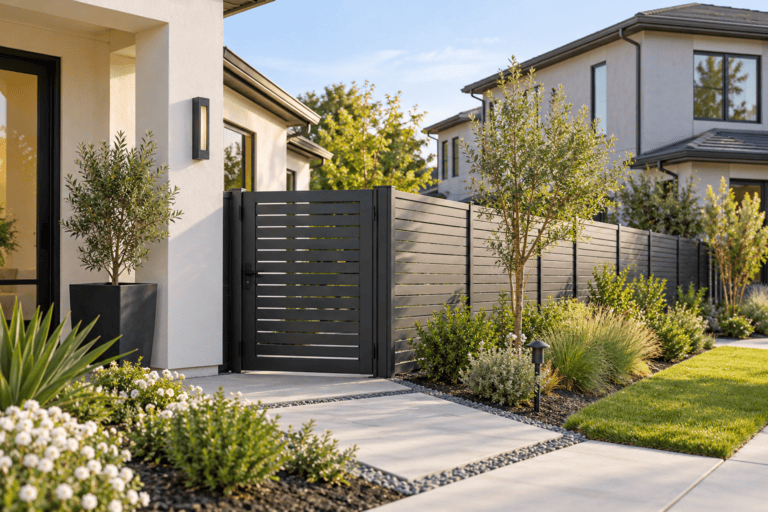
HOA Fence Approval: Rules, Checklist & Aluminum Fence Options
Prepare a stronger HOA fence application with a step-by-step approval guide, submission checklist, sample request, and aluminum fence design considerations.
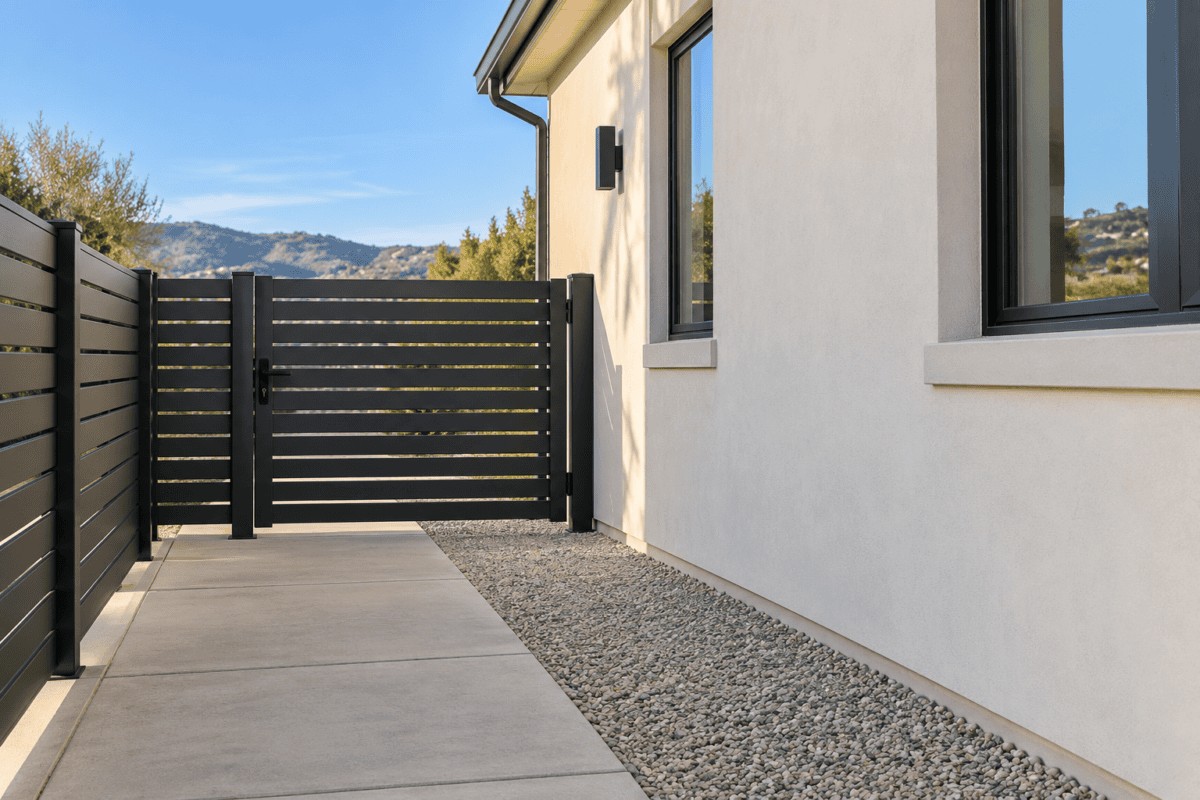
Zone 0 fencing starts with the connection between your fence and your home. If you are replacing a side gate or planning a new fence in a wildfire-prone area, the material, location, and surrounding ground cover all matter. Aluminum is a useful noncombustible material to consider, but choosing a metal panel is only one part of a complete plan.
This guide explains California’s current Zone 0 rulemaking status, how to evaluate a fence near your house, and what to confirm before ordering an Alumission fence or gate.
Research checked October 16, 2026. The featured image is an AI-generated design concept, not a photographed installation or evidence of code approval.
Zone 0 is the area immediately around a building, extending out five feet. Its purpose is to reduce opportunities for wind-blown embers to ignite materials close to the structure. It is part of a wider defensible-space strategy, rather than a substitute for maintaining the rest of the property or hardening the home.
A fence deserves attention because it can connect the yard directly to the building. A combustible side gate, timber post, or decorative screen can leave that connection in place even when most of the fence is metal.
As checked on October 16, 2026, the Board of Forestry’s website says the regulation package remains in final review with the Office of Administrative Law. Do not treat a news headline about Board approval as confirmation of a final effective date. Check the Board of Forestry’s official Zone 0 status and documents, then ask your local fire authority which requirements apply to your address.
The Board’s September 2026 guidance describes different treatment for new combustible fencing within Zone 0, existing fencing, repairs, and connections to occupied structures. It describes allowing existing combustible fences to remain and be repaired, while requiring a noncombustible gate or panel at an attached connection within a specified phase-in period. The guidance does not describe wholesale replacement of every existing wood fence across an entire property.
The guidance’s cover still leaves the effective date blank. Use the current official rule text and local instructions to establish your deadline and scope; do not calculate a deadline from this article. The September guidance is available through the official Board page linked above.
The UC Agriculture and Natural Resources Fire Network explains that an attached combustible fence can provide a route for fire to reach exterior walls and eaves. Its practical guidance recommends replacing the last five feet of an attached fence with a noncombustible section, such as a metal gate, and removing nearby combustible materials.
Research from the National Institute of Standards and Technology on fences and mulch also examines how fence construction, ground cover, wind, and spacing influence fire spread. The useful lesson for a homeowner is to inspect the entire arrangement, not just the material printed on a product label.
Walk the fence from the yard toward the house. Note where the panels change material, whether a gate attaches to a wood post, and where leaves collect beneath the bottom rail. Photograph those details before asking for a replacement quote.
Noncombustible is the more useful term for aluminum fence components. It describes a material characteristic; it does not mean an installed fence cannot be damaged by fire, will block all heat or embers, or will guarantee that a home survives a wildfire.
Aluminum can lose strength, deform, or melt under severe heat. NIST’s research on accessory-structure fire exposures illustrates this distinction for aluminum construction: a noncombustible material can still suffer heat damage. That research is not a fire test of Alumission fencing.
For an Alumission project, request information for the exact fence or gate assembly—including its finish, posts, caps, hardware, infill, and attachments—and confirm what your reviewing authority accepts. Do not assume a wood-look appearance means real wood, or that a metal frame makes every infill material noncombustible. Likewise, a coating description is not a fire-resistance rating.
Alumission’s aluminum fence and gate options are worth considering when replacing a combustible connection near the house. The final choice should match your required design and documentation, not rely on a blanket “Zone 0 approved” label.
Give the local fire or building department your address, a simple site plan, and photos. Ask whether your project is a repair, a replacement, or new construction; which part of the fence is affected; and whether local requirements go beyond the state baseline. If you belong to an HOA, start its architectural review at the same time.
Mark the house, attached structures, fence line, gates, and property boundary. Identify the portions nearest the building and every attachment point. Ask the reviewing authority how to measure the relevant clearance for your particular eaves, decks, and layout. A rough sketch helps identify questions; it does not replace an approved plan.
Replacing only the gate leaf may leave a combustible post or nearby attachment that still needs attention. Have the installer describe the whole proposed connection.
Record the clear opening, desired height, swing direction, ground slope, latch position, and access needed for bins or equipment. Check that the open gate will not obstruct a required path. For a pool enclosure, emergency access route, or other regulated use, confirm the additional requirements separately.
CAL FIRE’s Wildfire Action Plan recommends noncombustible hardscape near the structure and replacement of attached combustible fences and gates. Concrete, pavers, and gravel can support that approach, provided the area is maintained. Preserve drainage and access when changing the surface.
A new metal fence does not remove the need for maintenance. Sweep leaves and wind-blown debris away from posts, hinges, and the wall. Avoid using the gate corner as storage for lumber, boxes, or yard waste. Recheck the area after windy weather and as landscaping grows.
Imagine a wood gate between the house and a boundary fence. Before choosing a replacement, photograph both sides, measure the opening at several heights, and identify what supports the existing hinges. Ask the local authority which connection detail it expects and whether the adjacent fence section is part of the work.
Next, compare an aluminum gate and any required matching panel as a complete package. Confirm the post and mounting design, clearance under the gate, hardware, and finish. Once the required approvals are in place, order to the confirmed dimensions and retain the product documents with your project records.
For layouts and kit options, explore Alumission side-yard gate kits and aluminum fence kits. Send the team your measurements, photos, and the requirements you received so the discussion starts with the actual project.
Keep the answers in writing. A product quote, an HOA approval, and a fire-authority acceptance serve different purposes.
Not necessarily. The Board’s published guidance distinguishes existing fences from new work and attached connections. The scope depends on the applicable final rules, local requirements, and the work you are proposing. Obtain an address-specific answer before removing an entire boundary fence.
No. The gate is one component. Its supports, surrounding materials, location, and the rest of the property still need to meet the applicable requirements.
Discuss the exact design with your authority and, where applicable, your HOA. Material choice alone does not settle height, spacing, access, structural support, or other project requirements.
Do not assume a discount or coverage decision. Ask your insurer which mitigation measures and documentation it recognizes for your policy before including an insurance saving in your budget.
Bring the local fire requirements and your proposed fence details to the architectural committee together. Our HOA fence approval guide includes a submission checklist.
Start with the local requirements, then choose a system that fits your opening and design goals. Request an Alumission project quote with your photos, dimensions, preferred finish, and any written requirements. You can also browse our gate installation resources before discussing installation with a professional.
This is a homeowner planning guide. The linked agencies provide the current rules and technical guidance; their inclusion does not indicate endorsement of Alumission or a product certification.
Explore products, installation resources, and advice from our team.
More ideas and practical guidance for your outdoor project.
Prepare a stronger HOA fence application with a step-by-step approval guide, submission checklist, sample request, and aluminum fence design considerations.
The Rise of Non-Combustible Aluminum Fences: Addressing California’s New Fire Safety Law For Fireproof Fencing In response to the escalating
The Role and Importance of Housing Fence : Enhancing Security, Privacy, and Aesthetic Appeal In the realm of residential architecture,
Fill out the details below and we’ll get back to you shortly!
