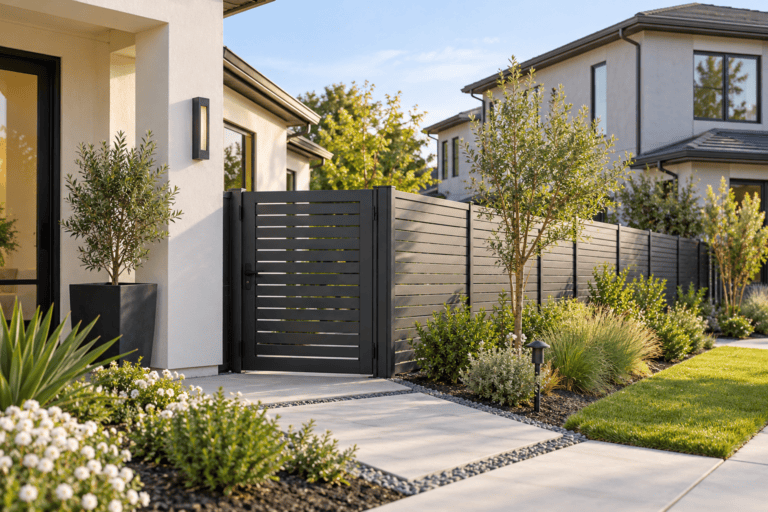
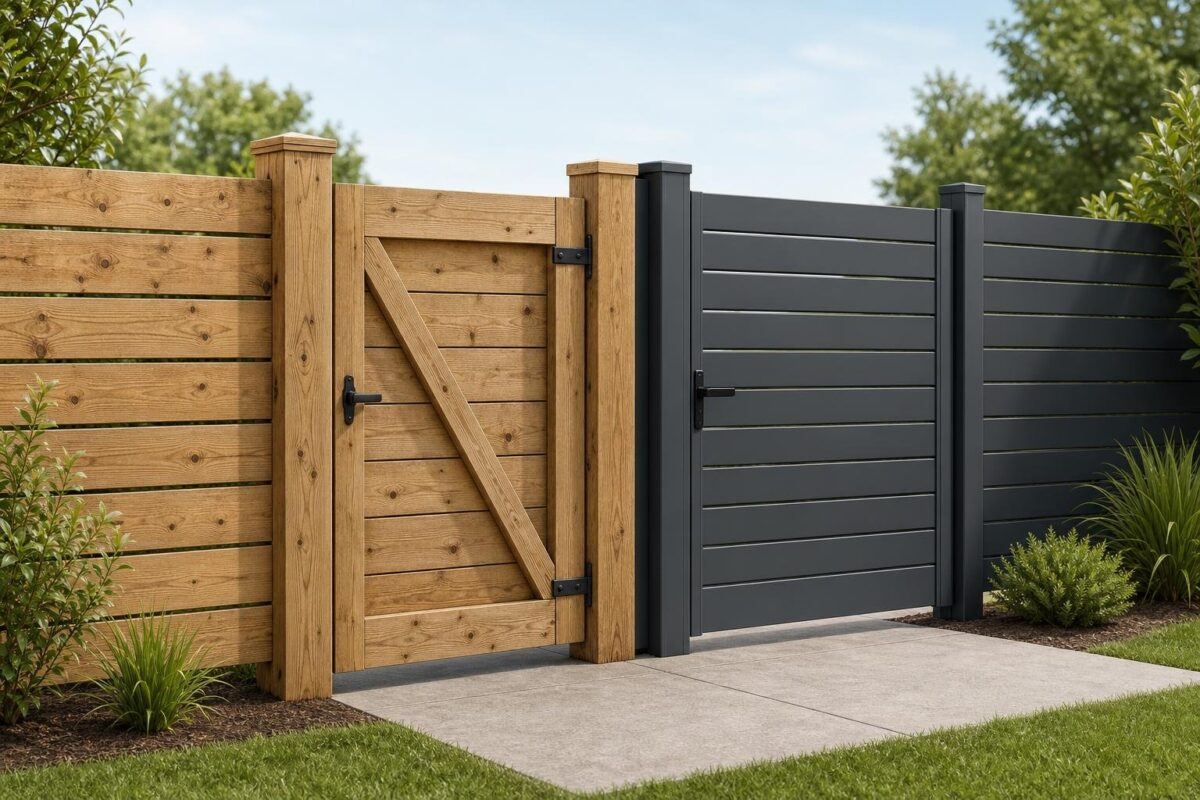
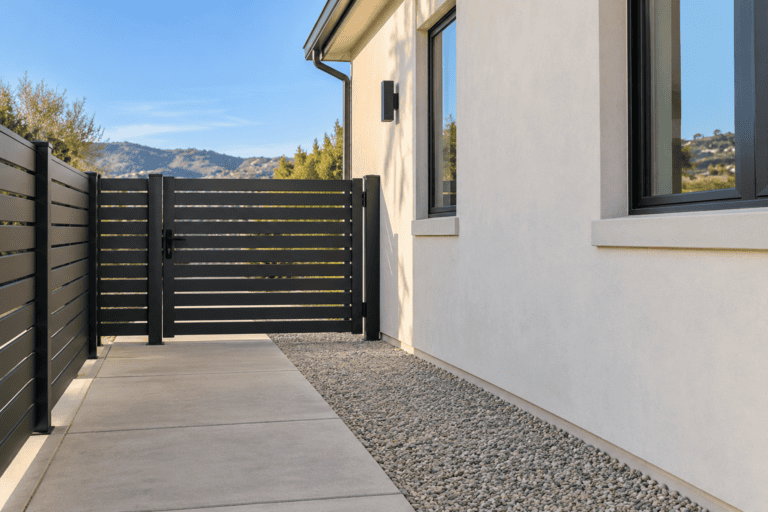
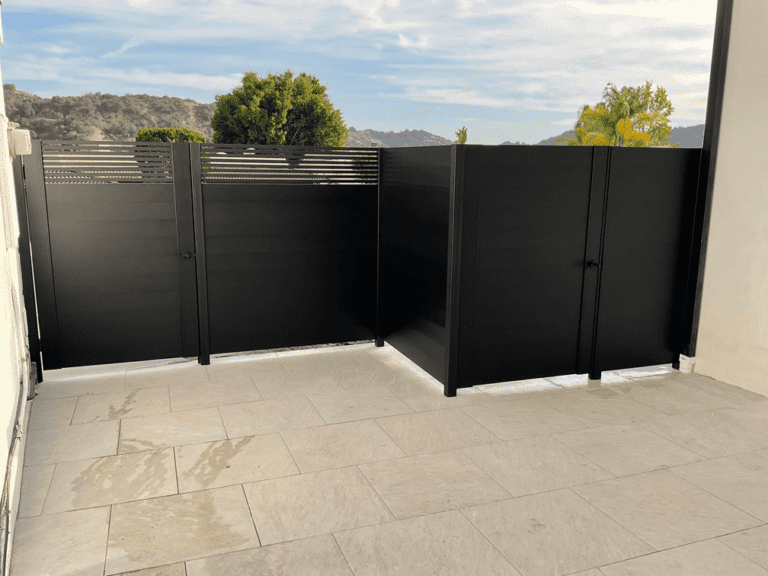
Choosing a wood vs aluminum fence is less about finding a universal winner than deciding what you want to see—and maintain—in your yard. Wood may appeal if you prefer its natural character and are comfortable planning for finish care. Aluminum may appeal if you prefer a different surface and slat pattern. In either case, compare the proposed fence and gate as a complete project rather than judging a sample alone.
Start with the upkeep you can manage
Exterior wood stains are less prone to cracking or peeling than film-forming finishes. The USDA Forest Service guide to exterior wood stains is a useful starting point, but ask your supplier for care instructions for the specific wood and finish you are considering.
Before choosing wood, ask whether you want to preserve its initial appearance or are comfortable with changes over time. Get written guidance on cleaning, finish renewal and how to address damaged boards. Rather than relying on a generic maintenance schedule, ask how the recommended care applies to your chosen materials and exposure.
Aluminum does not develop the red rust associated with iron and steel. Powder-coated finishes still benefit from appropriate cleaning and care. Alumission’s horizontal fence guide also advises considering other materials used in an installation. Ask for the finish-care instructions for the exact product you select, and find out how to inspect and maintain its hardware separately.
Before selecting either material, ask the supplier for a written care plan. When comparing proposals, ask who will perform routine care, what products are recommended and how readily you can identify replacement components later. Avoid assuming a particular service life or maintenance interval without information specific to the proposed fence and its setting.
Compare the view, not just the material
Stand where you spend time in the yard and identify what you want to screen. Then look toward the same area from a neighboring viewpoint, a window and the gate approach. Decide where you want a more continuous screen and where you would rather preserve an open view. Bring those observations to both the wood and aluminum suppliers.
New York Style uses closely stacked slats for a more continuous visual screen. That description comes from Alumission’s horizontal fence guide; review the selected configuration and sightlines rather than assuming a view will be blocked from every angle.
Slat rhythm is another useful comparison. Miami Style single swing gate kits combine 5.5-inch and 1-inch horizontal aluminum slats. Review the Miami Style product page as an example of a mixed-width gate, then compare it with the fence design you have in mind. Confirm the style and finish of each selected component rather than assuming every gate will match every panel.
Aluminum can receive a matte, polished, or textured finish, including a wood-like texture. The Aluminum Association’s processing overview describes these as general material possibilities, not as available finishes for a particular Alumission product. Ask each supplier for current options and samples if finish is central to your decision.
Make the installation scope comparable
Request proposals for the same fence route, desired height, gate openings and site conditions. Identify any existing fence removal, changes in elevation, posts, mounting surfaces and access constraints. Ask each contractor to list what is included and what still needs a decision. This makes a quote comparison more useful than comparing a board price with a kit price.
If you are considering a kit, read the instructions for that exact selection before deciding whether to assemble it yourself. The Miami Style single swing gate kit requires assembly and installation, with no welding needed. Its kit sizes describe maximum fitting limits rather than the size of a preassembled gate leaf. Check the illustrated installation guide before cutting. These points apply to that kit; check other products individually.
For a sloped yard, ask each supplier or installer to explain the proposed layout. Do not assume that a standard panel can follow any slope. Photos and measurements can help a contractor discuss the site, but confirm the final approach before ordering or cutting components.
Use a short decision checklist
Before committing, write down your answers to these questions:
- Appearance: Which sample looks right beside the house and landscape? Is a natural wood appearance important, or do you prefer the selected aluminum finish?
- Privacy: Which areas need screening, and from which directions? Have you reviewed the actual slat arrangement?
- Care: What cleaning, finish care and hardware inspection does each supplier recommend? Who will do that work?
- Scope: Do the proposals cover the same fence route, gates, removal and installation work? What remains excluded or undecided?
- Records: Can you keep the product names, instructions, finish information and installer’s scope together for future reference?
Once you have a design and scope to compare, shop fence and gate kits and check the current details for each selection.